
Standard Cleaning Checklist: 8 Room-by-Room Tasks
Use this standard cleaning checklist for 8 room-by-room tasks, time estimates, frequency guidance, eco-friendly supplies, and professional cleaning tips.
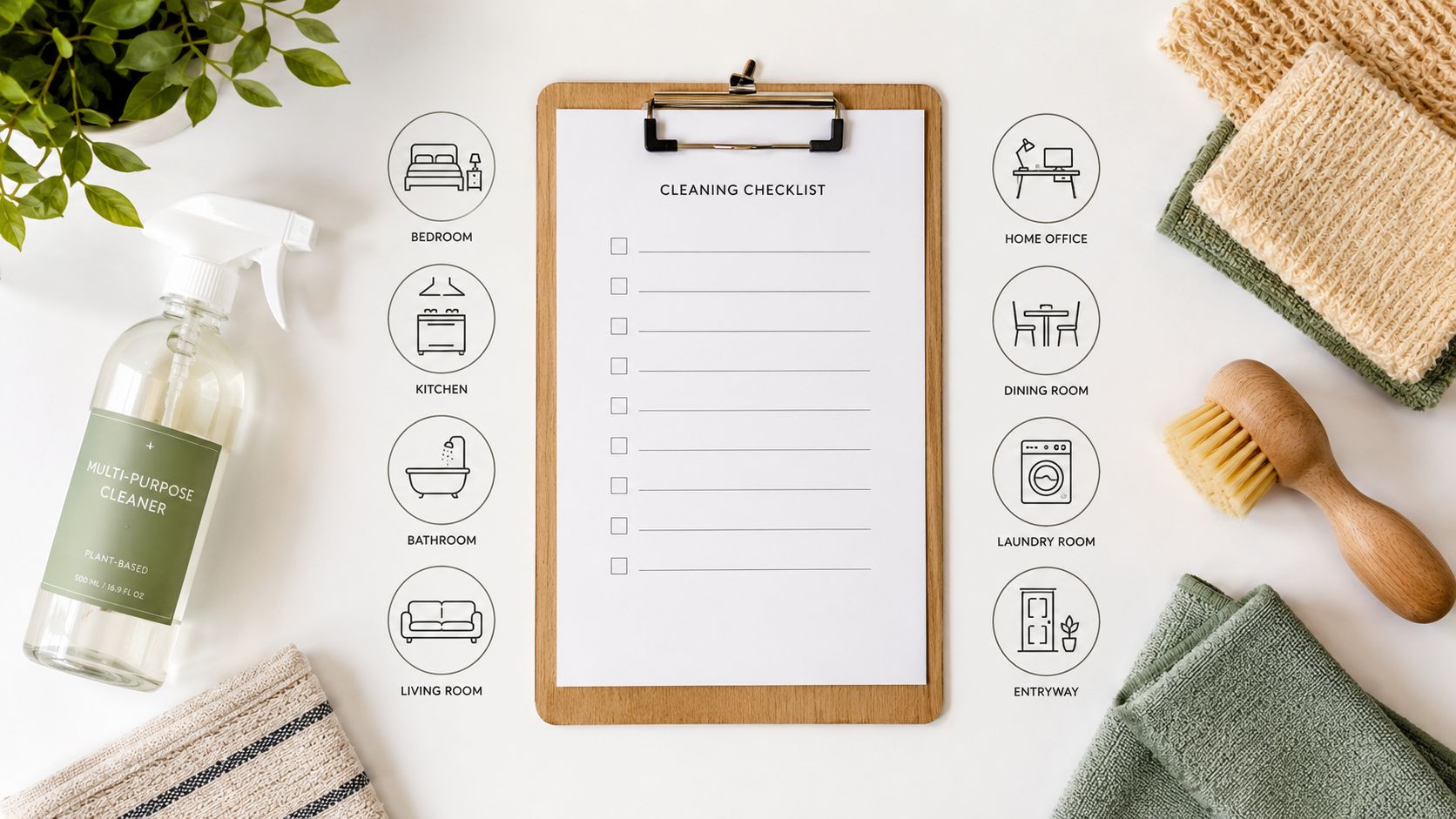
You're trying to get the house presentable before work, school pickup, or an unexpected showing, but every room seems to create another job. You wipe the counters, then realize dust has settled on the shelves. You mop, then track crumbs back across the floor. A standard cleaning checklist prevents that loop by putting tasks in an order that reduces missed surfaces, repeated work, and avoidable damage.
The printable format below moves room by room through eight practical tasks, with estimated effort, maintenance frequency, surface-specific care, and decision points for routine, deep, move-in/move-out, and post-construction cleaning. The U.S. Bureau of Labor Statistics benchmark summarized by the American cleaning-habits data reports that adults spent an average of 0.33 hours per day on interior cleaning in 2025, or about 20 minutes daily. That's a useful reminder that small, repeatable sessions matter.
| Cleaning type | Typical scope | Best use |
|---|---|---|
| Routine | Dusting, counters, sinks, toilets, floors, trash, and high-touch surfaces | Ongoing home maintenance |
| Deep | Routine tasks plus buildup, appliance interiors, detailed trim, grout, and less accessible areas | Periodic reset or neglected spaces |
| Move-in or move-out | Empty-room cleaning, cabinets and appliances as agreed, floors, bathrooms, and inspection points | Before occupancy or after belongings leave |
| Post-construction | Fine dust, residue, debris, fixtures, floors, windows, and renovation-related cleanup | After remodeling or building work |
Work top to bottom, from the back of each room toward the exit, and keep the sequence dry before wet. Dust before vacuuming, vacuum before mopping, and leave specialty work for the situations that require it.
Table of Contents
1. Dusting and Surface Cleaning
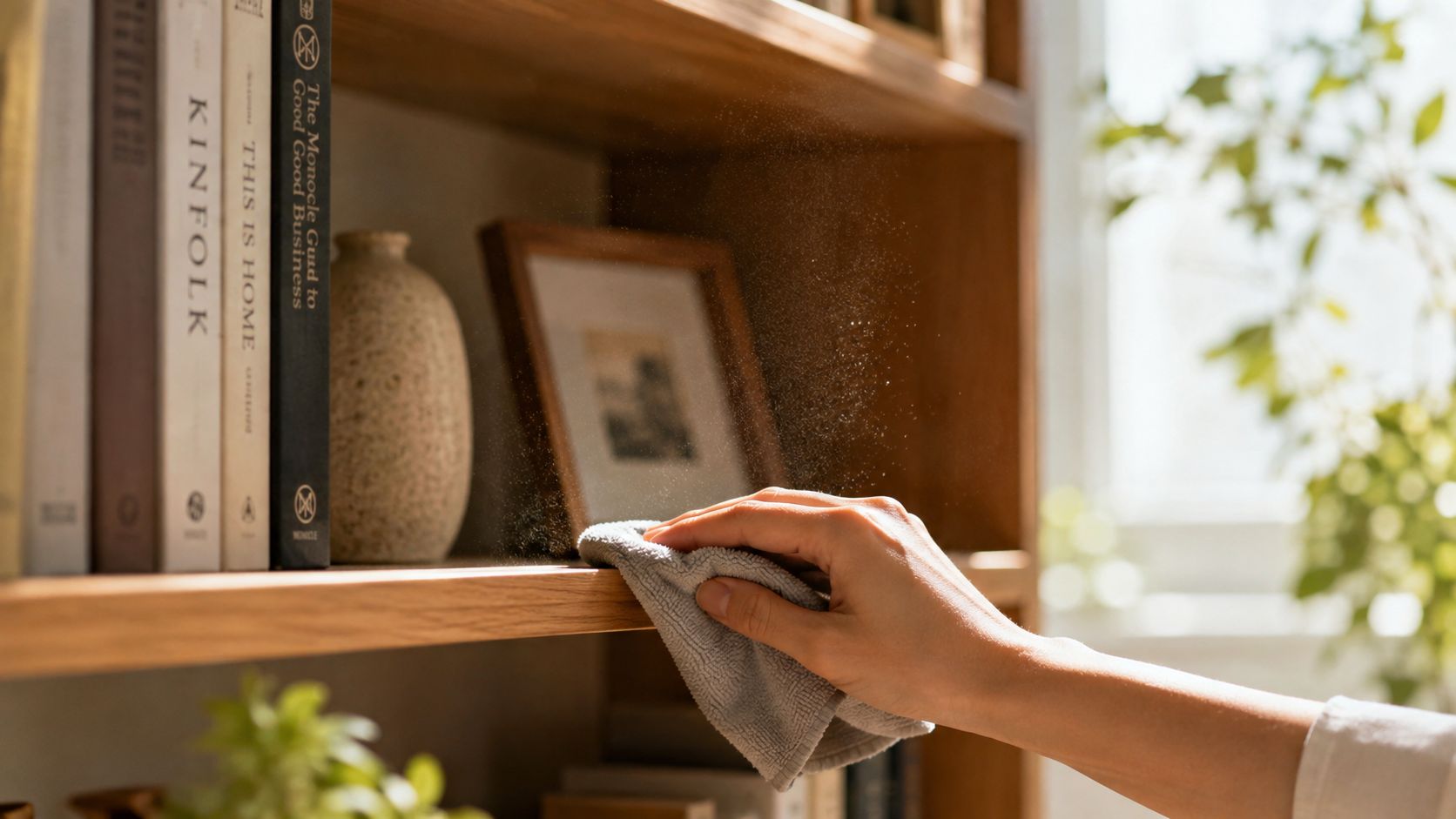
Dusting comes first because particles fall. Start with ceiling fans, crown molding, shelves, furniture, windowsills, and baseboards, then finish with floors. Cleaning in the opposite direction forces you to repeat work and can grind loose grit into tile, marble, wood, or other finished surfaces.
Use a clean microfiber cloth for most furniture and trim. Microfiber captures particles instead of pushing them across the surface, while a HEPA-filter vacuum can help allergy-conscious households collect fine debris after dusting. Keep a lightly damp cloth nearby for electronics, but never spray cleaner directly onto a screen, keyboard, speaker, or other device.
Practical rule: If you can see the top of a surface from standing height, dust it before you clean the floor beneath it.
Move from the back of the room toward the doorway so you won't walk through areas you've already finished. A small cleaning caddy helps keep the process consistent, especially when several family members share the work or when a property manager needs a repeatable turnover standard.
Printable dusting checklist
- High surfaces: Dust ceiling fans, light fixtures, crown molding, and the tops of tall cabinets.
- Furniture: Wipe tables, shelves, headboards, dressers, and other horizontal surfaces.
- Edges and trim: Clean baseboards, door frames, windowsills, and ledges.
- Decor: Lift or carefully move decorative objects instead of dusting around them.
- Electronics: Use a dry or barely damp cloth and follow the manufacturer's instructions.
- Floors: Vacuum only after airborne dust has settled.
Homes near wooded areas or busy roads may need more frequent surface dusting than lightly used rooms. During high-pollen seasons, consistent dust removal paired with HEPA vacuuming is a practical choice for households sensitive to airborne particles.
If you wash your microfiber cloths, follow a dedicated care routine such as the one described in this guide to washing microfiber cloths. Dirty or improperly washed cloths can spread residue instead of collecting it.
2. Kitchen Deep Cleaning and Degreasing
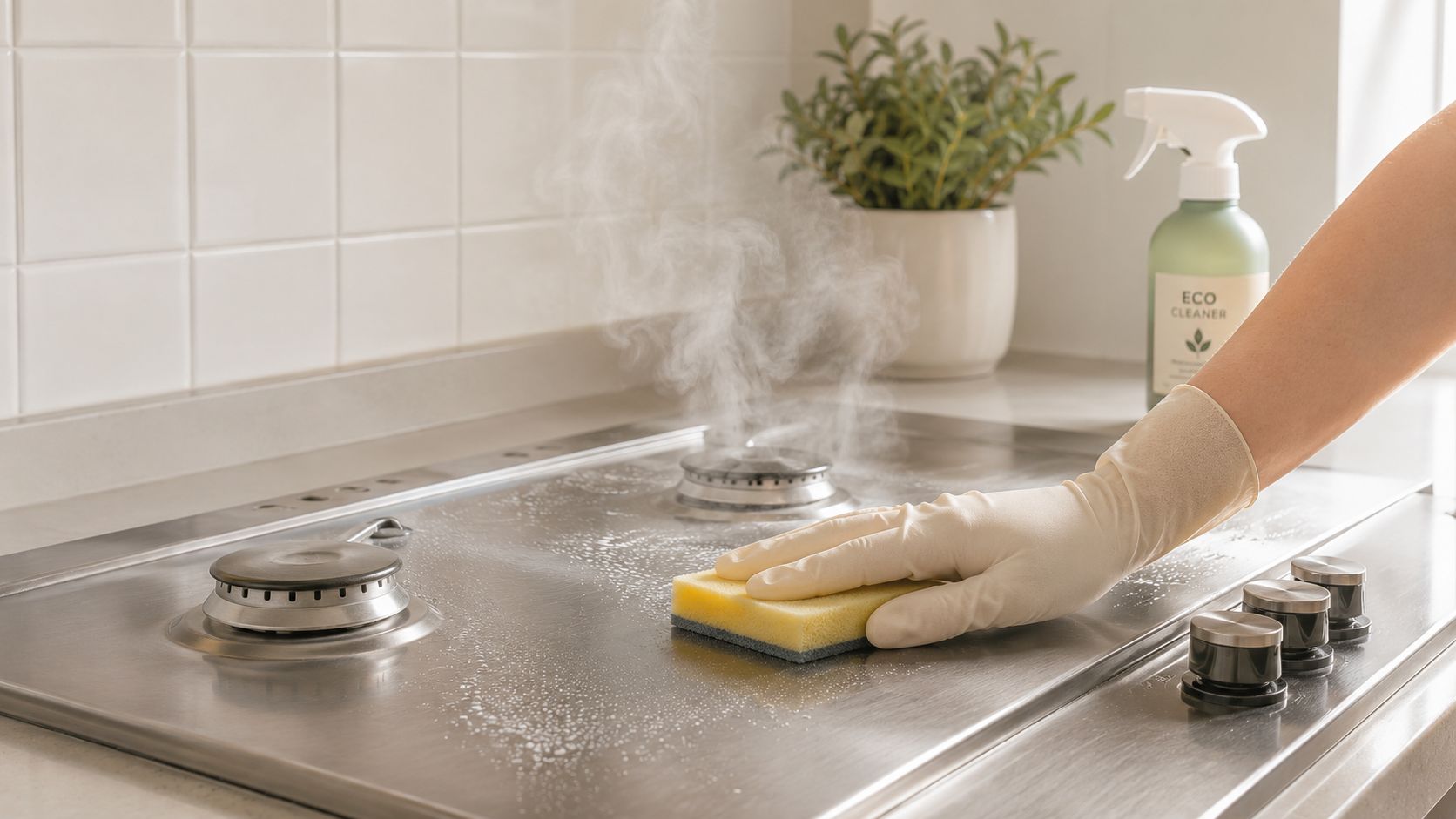
A kitchen can look tidy while a sticky grease film remains on the hood, cabinet fronts, appliance handles, backsplash, and nearby walls. Clean from the range hood and ventilation area downward, since loosened grease may drip onto surfaces you have already wiped.
Use a short daily reset for counters, sinks, stovetops, and handles after cooking. Schedule a deeper pass for the refrigerator top, microwave interior, oven racks, cabinet exteriors, and safely reachable spaces beside or behind appliances. This detail matters before a home showing, when grease-free surfaces help the kitchen look maintained.
Choose products by surface
- Stainless steel: Use a stainless-steel product and wipe with the grain to limit streaks.
- Natural stone: Select a pH-neutral cleaner for marble, granite, and similar materials. Acidic products can etch the surface.
- Food-contact areas: Use a product labeled for food-preparation surfaces and follow its directions.
- Microwave interiors: Steam a bowl of water with lemon for 5 minutes, then wipe loosened residue. Adjust timing for your appliance and the severity of buildup.
- Oven racks: Remove the racks, soak them in hot water with a suitable degreaser, and scrub after the residue softens.
High-use households may need a kitchen deep clean monthly. Moderate-use homes may manage with a quarterly reset, though visible buildup calls for earlier attention. Heavy grease, neglected appliance interiors, or residue around fixed equipment can exceed routine maintenance. Hire a professional when safe access, ventilation, or surface compatibility is uncertain.
For a rental turnover, renovation handoff, or move-in service, write the scope before work starts. Confirm whether appliance interiors, cabinet interiors, behind-appliance areas, and heavy buildup are included. For one commonly neglected area, follow this oven drip-pan cleaning guide.
3. Bathroom Sanitation and Mold Prevention
A bathroom can look clean while moisture continues damaging grout, caulk, and painted surfaces. Build the routine around moisture control: clean the shower, tub, sink, toilet, mirrors, counters, floors, and high-touch points, then check for leaks, failing caulk, weak ventilation, and damp areas. Cleaning removes surface soil, but it will not repair plumbing or resolve extensive mold growth.
Start with ventilation. Turn on the exhaust fan before applying cleaner and leave it running throughout the job. Work from upper surfaces downward so loosened residue does not soil areas already finished. Follow the product label's contact time, especially for disinfectants, rather than wiping immediately.
For surface care, use pH-neutral products on marble, granite, and other natural stone. Acidic or harsh cleaners may etch the finish even when they remove soap residue. On tile and grout, match the disinfectant and brush to the material. Older, colored, or deteriorating grout may need gentler handling.
Use this sequence to limit rework:
- Wipe shower walls, fixtures, shelves, and mirrors.
- Scrub grout, drains, corners, behind fixtures, and the toilet base.
- Clean the sink, counter, toilet, and floor.
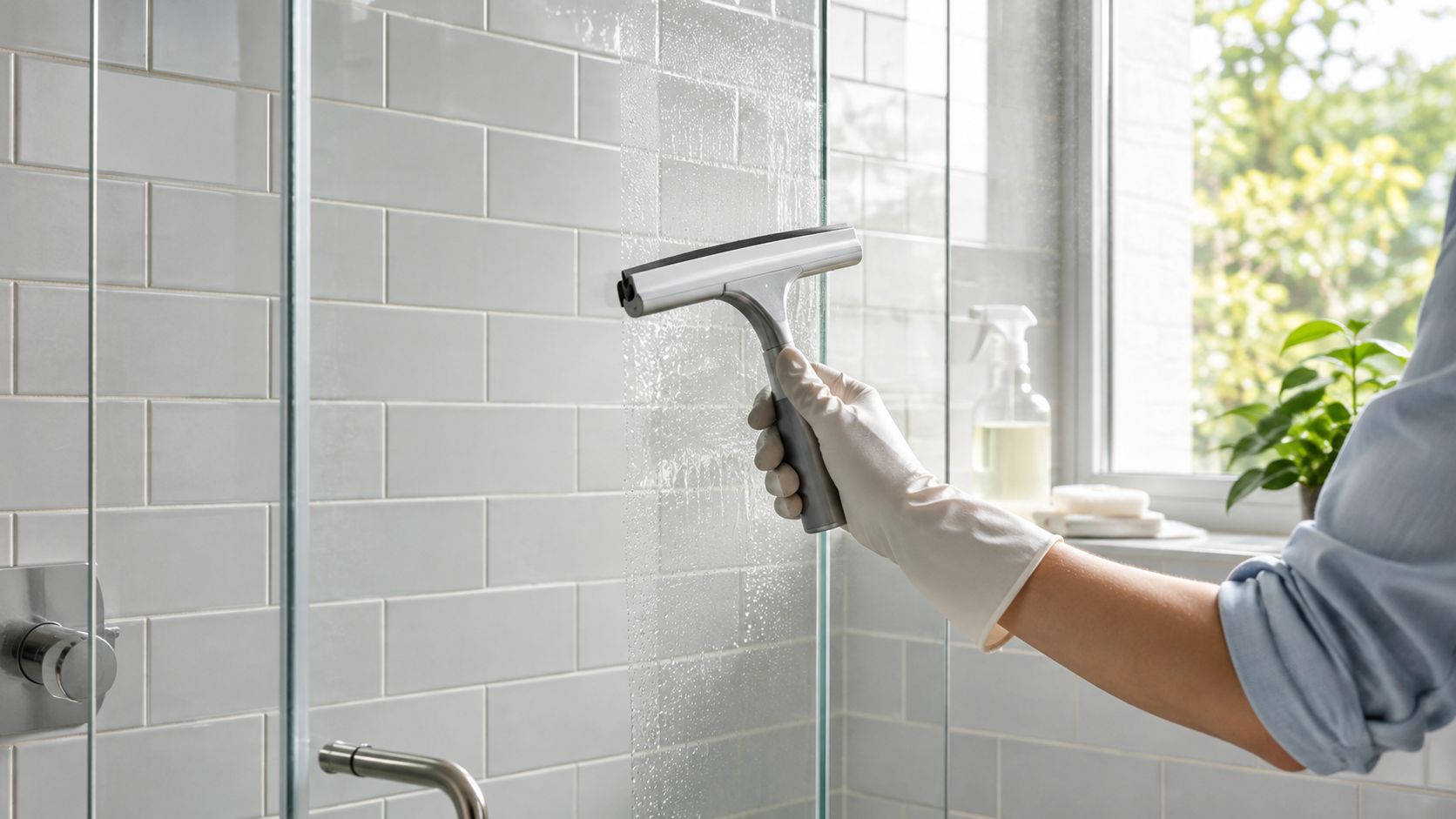
- Squeegee glass, then dry seams and other moisture-prone joints.
Run the exhaust fan during showers and for 30 minutes afterward. A squeegee after each shower, plus weekly touch-ups, helps prevent mineral deposits and soap film from becoming a larger cleaning job.
Persistent dampness is a warning sign. If the room stays wet despite ventilation, cleaning alone will not solve the cause.
Homes with recurring moisture or mold susceptibility may schedule professional bathroom sanitation monthly, then maintain the result with ventilation and weekly touch-ups. Widespread mold, rapid regrowth, or mold associated with a leak calls for an appropriate remediation or building professional. For a detailed room-specific process, use this deep bathroom cleaning guide.
4. Vacuuming and Floor Care
Vacuuming works best after loose dust has settled from higher surfaces. Remove grit, crumbs, and pet hair before foot traffic presses them into carpet or drags them across wood, tile, or stone. In entryways, hallways, dining areas, stairs, and beneath furniture, slow overlapping passes remove more soil than a quick pass through the room.
Set the vacuum for the floor, not for convenience. Use a hard-floor tool on wood and tile, carpet-height settings on carpet, and a HEPA-filter machine when fine-particle control matters to the household. Empty the canister or replace a full bag before suction drops.
Choose the tool and method by floor
- Carpet: Use the standard head for surface debris. For embedded pet hair in an area rug, switch to a motorized brush roll only if the rug maker permits it. Wall-to-wall carpet usually tolerates the brush roll, but delicate, looped, or antique rugs can snag.
- Hardwood: Use a soft floor tool, keep wheels and attachments clean, and avoid excess moisture.
- Tile: Vacuum grout edges and corners before damp cleaning so grit does not spread into joints.
- Natural stone: Remove abrasive particles frequently and use cleaners approved for the specific stone.
- Pet-heavy areas: Give extra passes to traffic lanes, upholstery, stairs, and spaces under furniture.
Pet-heavy homes may need high-traffic vacuuming 2 to 3 times weekly. Less-used rooms can follow a lighter schedule. Carpet may benefit from professional cleaning every 12 to 18 months, especially when soil has settled below the surface. Call a professional extractor sooner when carpet remains gray after thorough vacuuming, develops a persistent odor, or feels sticky after spot treatment. Extraction can also prevent over-wetting from repeated do-it-yourself attempts.
For move-in cleaning, leave floors dry and ready for occupancy. Post-construction cleanup may require specialized removal of fine renovation dust. For newly installed flooring, confirm with the installer when vacuuming, damp cleaning, and furniture placement are safe, especially around fresh grout and sealants.
5. Window and Glass Cleaning
Clean glass changes how a room feels because it lets more daylight through and removes fingerprints, dust, and environmental film from the view. The task includes interior and exterior windows, mirrors, glass doors, skylights, and high panes, but not every window is a safe do-it-yourself project.
Use a squeegee and an appropriate glass solution, then clean frames according to their material. Vinyl, wood, and aluminum frames can respond differently to moisture and chemicals. Historic homes with original glass deserve extra caution, and high windows may require extension poles, ladders, or professional access equipment.
Prevent streaks and mineral spots
Clean on a cloudy day when direct sun won't dry the solution too quickly. In hard-water areas, distilled water or a specialized product can reduce mineral deposits. Use a clean washer and squeegee blade, and change the direction of your final passes so you can identify whether a mark is inside or outside.
For a pre-sale or move-in clean, prioritize exterior windows visible from the street and the glass that shapes the first impression of the entry, kitchen, and main living areas. Post-construction cleanup needs more than ordinary polishing because renovation dust can cling to frames, tracks, screens, and glass edges.
Professional window cleaning can be scheduled 2 to 4 times annually, depending on environmental exposure and the home's appearance needs. Spring and fall are common planning points, but construction, tree pollen, coastal exposure, and active landscaping can change the schedule.
Safety decision: If reaching the glass requires unstable furniture, an unsafe ladder position, or working near difficult exterior access, hire a window-cleaning professional.
Don't forget skylights, upper panes, screens, and tracks when requesting an estimate. A clear scope prevents the common disappointment of receiving clean interior glass while the most visible exterior areas remain untouched.
6. Mopping and Hard Floor Disinfection
Mopping should follow vacuuming, not replace it. Loose grit turns into muddy residue when mixed with water, and the mop can spread that residue across the floor or into grout. Use a clean microfiber pad, work in manageable sections, and change the solution when it becomes visibly dirty.
The right amount of water depends on the flooring. Tile generally tolerates more moisture than hardwood, engineered wood, or laminate, but even tile can suffer when dirty water sits in porous grout. Natural stone requires pH-neutral products because acidic cleaners may etch marble, granite, and related surfaces.
Match the method to the material
- Hardwood and engineered wood: Use a damp, not wet, mop and dry any standing moisture quickly.
- Laminate: Use minimal water and prevent liquid from entering seams.
- Tile and grout: Vacuum first, then use a compatible cleaner and consider resealing grout when appropriate.
- Natural stone: Use a stone-safe, pH-neutral product and avoid acidic household solutions.
- Hard-water areas: Distilled or deionized water can help reduce mineral deposits when used with suitable professional products.
After a professional tile installation, wait 48 to 72 hours before mopping to allow grout to cure, unless the installer provides different product-specific instructions. The installation materials and grout system control the safe timeline, so the installer's guidance takes priority.
High-traffic floors may receive monthly detailed mopping, while moderate-use spaces may need a quarterly intensive pass, with lighter maintenance in between. Disinfection also isn't automatically better when the product damages a surface or leaves residue. Clean first, choose the right product, follow the label, and keep people and pets away during the required application and drying period.

7. Clutter Organization and Decluttering
A cleaner cannot reach surfaces buried under mail, toys, clothing, tools, or packages. Decluttering is separate from routine cleaning, and many professional scopes exclude organizing, heavy buildup, inside cabinets, refrigerators, closets, heavy furniture, and exterior windows, as outlined in this standard house-cleaning scope guide.
Use a timer and finish one small zone before starting another. For a practical drawer routine, pull out one drawer and place everything on the bed or a clear surface. Decide each item in under 10 seconds. Return keepers to the drawer, bag donations immediately, discard damaged items, and place everything that belongs elsewhere in a box labeled by room. Carry the box during the final reset. Buying storage bins before removing excess items often keeps clutter in a tidier-looking form.
Build a system that supports cleaning
- Entry zone: Assign shoes, bags, keys, and mail a landing place.
- Kitchen counters: Store appliances used occasionally instead of leaving them out.
- Bedrooms: Handle clothing and laundry decisions before wiping surfaces.
- Basements and attics: Label categories, while keeping vents, utilities, and floors accessible.
- Documents and photos: Digitize suitable items and preserve originals with legal or personal value.
Storage should reduce daily decisions, not create another project. Schedule a short reset as often as belongings accumulate, and pair decluttering with a deep clean after surfaces are cleared. A simple weekly reset may suit a busy household, while homes with frequent deliveries, children, or shared spaces may need shorter sessions more often.
Move-out cleaning usually needs a final pass after furniture and boxes leave. Move-in organizing decisions should be agreed upon separately from the cleaning scope. For downsizing, professional organizers can help when sentimental belongings, storage areas, or large volumes make sorting slow or physically demanding. Post-construction debris and heavy items require the disposal plan in the next cleaning stage, not ordinary decluttering.
8. Trash Removal and Disposal Management
Trash removal closes the cleaning loop. A room can look polished while bags, unwanted items, recycling, donations, and renovation debris remain in hallways, garages, or utility areas. Sort before you clean so discarded items don't block access to surfaces and floors.
Create clearly separated zones for trash, recycling, donations, compost, and items that require special handling. Check local Massachusetts requirements for recycling and hazardous materials, especially for paint, chemicals, batteries, electronics, and renovation waste. Computers and televisions should go through appropriate electronic-waste channels rather than ordinary household trash.
Plan disposal before special projects
- Move-out: Walk every room, cabinet, closet, basement, and storage area after belongings are removed.
- Move-in: Remove abandoned items before deep cleaning, so the new occupant starts with empty, usable spaces.
- Post-construction: Arrange an appropriate dumpster or debris-removal service for construction materials.
- Large items: Coordinate furniture or appliance pickup instead of leaving items beside ordinary bins.
- Daily maintenance: Tie bags securely and remove them often enough to prevent odors and pest attraction.
Construction debris shouldn't be handled like normal household waste. Materials may be heavy, sharp, dusty, or subject to local disposal rules, so professional post-construction cleaners and removal providers are the safer choice when the volume or material exceeds routine maintenance.
A property manager can add disposal verification to a turnover checklist, while a homeowner can use a simple final walk-through. The key decision is whether the item belongs in the home, in a donation stream, in recycling, or with a specialized disposal provider. Cleaning becomes easier once every category has a destination.
8-Point Cleaning Checklist Comparison
| Task | Implementation complexity | Resource requirements | Expected outcomes | Ideal use cases | Key advantages |
|---|---|---|---|---|---|
| Dusting and Surface Cleaning | Low, routine technique, some high-reach skill | Microfiber cloths, dusters, extension poles, eco cleaners | Reduced dust/allergens; fresher surfaces | Regular maintenance, high-pollen seasons, pre-vacuuming | Improves air quality; quick visible results |
| Kitchen Deep Cleaning and Degreasing | High, targeted degreasing and careful surface care | Heavy-duty degreasers, scrubbing tools, PPE, ventilation | Grease removal; sanitized appliances and surfaces | Heavy-use kitchens, pre-sale, post-construction | Enhances food safety; extends appliance life |
| Bathroom Sanitation and Mold Prevention | High, disinfecting plus mold-targeted techniques | Disinfectants, mold treatments, grout tools, ventilation | Pathogen elimination; reduced mold risk and moisture damage | High-humidity homes, mold presence, move-in cleaning | Protects health; prevents structural damage |
| Vacuuming and Floor Care | Low–Medium, varies by flooring type | HEPA or professional vacuums, attachments, spot cleaners | Removes embedded dirt/pet hair; reduces allergens | Weekly upkeep, pet homes, post-installation care | Extends flooring life; improves indoor air quality |
| Window and Glass Cleaning | Medium, streak-free technique, safety for exterior/high windows | Squeegees, extension poles, ladders, distilled water/products | Clear views; more natural light; improved curb appeal | Pre-sale, seasonal cleaning, skylights/high windows | Enhances brightness and appearance; prevents long-term damage |
| Mopping and Hard Floor Disinfection | Medium–High, floor-type-specific protocols | Microfiber mops/pads, pH-neutral cleaners, floor machines | Sanitized, streak-free hard floors; protected surfaces | New installations, high-traffic areas, post-construction | Hygienic surfaces; preserves stone/wood integrity |
| Clutter Organization and Decluttering | Medium–High, time and decision-intensive | Storage solutions, bins, labeling, professional organizer option | Less clutter; easier cleaning and improved function | Move-in/out, staging, downsizing, overwhelmed homes | Reduces cleaning time; improves usability and wellbeing |
| Trash Removal and Disposal Management | Medium, regulatory knowledge and heavy lifting | Bags, bins, dumpsters, hazardous disposal services | Sanitized spaces; compliant waste handling | Move-outs, renovations, regular waste/recycling routines | Prevents odors/pests; supports recycling and compliance |
Turn the Checklist Into a Sustainable Routine
The checklist works best when it becomes a sequence rather than a weekend marathon. Begin with dusting and surface cleaning, continue through kitchen and bathroom work, vacuum all floors, clean glass where needed, then mop hard floors. Decluttering and disposal should happen before detailed cleaning in any room where belongings or waste block access.
A routine visit handles visible soil and recurring maintenance. A deep clean reaches buildup and less accessible areas. Move-in and move-out work depends on the property being empty and on the agreed scope, while post-construction cleanup requires specialized attention to fine dust, residue, fixtures, floors, windows, and debris.
| Task | Routine approach | Periodic or special attention |
|---|---|---|
| Dusting | Prioritize occupied rooms, trim, furniture, and high-touch surfaces | Reach ceiling fans, crown molding, high ledges, and hidden edges |
| Kitchen | Wipe counters, sink, stovetop, handles, and visible appliance fronts | Degrease ventilation, clean appliance interiors, and address buildup |
| Bathroom | Clean toilet, sink, shower, mirror, and floor | Scrub grout, inspect leaks, treat persistent moisture, and clean behind fixtures |
| Floors | Vacuum or sweep, then mop compatible hard surfaces | Schedule carpet, tile, stone, or specialty flooring care when routine methods no longer work |
| Windows | Clean reachable interior glass and mirrors | Arrange exterior, high-window, screen, skylight, or post-construction cleaning |
| Decluttering | Return items to established homes | Sort, donate, discard, organize, or prepare for a move |
| Disposal | Remove household trash and recycling | Coordinate electronics, hazardous materials, bulky items, and construction debris |
Frequently asked questions
What's the difference between standard cleaning and deep cleaning?
Standard cleaning maintains regularly used rooms and surfaces. Deep cleaning adds detailed work such as heavy buildup removal, appliance interiors, grout, trim, and areas that routine visits don't reach. Confirm exclusions because organizing, decluttering, heavy buildup, inside cabinets, inside refrigerators, inside closets, lifting heavy furniture, and exterior windows may cost extra or require a separate service.
Which products are safe for tile?
Use a product designed for the tile and grout you have. For marble, granite, and other natural stone, choose a pH-neutral cleaner and avoid acidic products that can etch the surface. When in doubt, test an inconspicuous area and ask the installer or a tile-care professional.
How should I prepare for move-in or move-out cleaning?
Remove personal belongings and separate trash, recycling, donations, and items requiring special disposal. Tell the cleaner whether cabinets, closets, appliance interiors, exterior windows, walls, heavy buildup, and debris removal are included. An empty home allows better access, but it doesn't automatically make every specialty task part of a standard scope.
What does post-construction cleanup involve?
Post-construction cleanup removes fine dust, residue, protective materials, and construction debris from surfaces, fixtures, floors, windows, and accessible details. It may require specialized vacuums, careful surface testing, and separate debris disposal. If dust has entered ventilation systems or renovation residue has hardened on tile or glass, professional help is safer than aggressive scrubbing.
SEO and schema recommendations
Use a descriptive page title and meta description that match the search intent, as recommended in Google's SEO Starter Guide. Keep the page user-focused, crawlable, and organized with a clear primary heading, descriptive subheadings, and an accurate description of what the checklist includes.
For structured data, use the Article or BlogPosting type where appropriate, then validate it with Google's Rich Results Test. Google's Article structured data documentation notes that Article markup has recommended properties rather than required ones. The FAQ content can use FAQPage markup, followed by validation with the Rich Results Test and URL Inspection tool, as described in Google's FAQ guidance. Keep the visible questions and answers accurate, useful, and consistent with the markup.
Use this printable checklist for routine maintenance when the work fits your time, tools, and surfaces. For recurring service, deep cleaning, move-in/move-out preparation, post-construction cleanup, or tile and flooring care in Wayland, Newton, Needham, Wellesley, Weston, and surrounding Massachusetts communities, Sunny Day Pro Services can help define the scope and sequence safely.
Sunny Day Pro Services offers recurring house cleaning, deep cleaning, move-in/move-out service, post-construction cleanup, and expert tile and flooring care for busy Massachusetts homeowners. Visit Sunny Day Pro Services to request a quote and choose the service and schedule that fit your home.

