
Tile and Grout Cleaning Machines for Home Use
Discover the best tile and grout cleaning machines for home use in 2026. Compare top models, key features, and tips to choose the right cleaner.
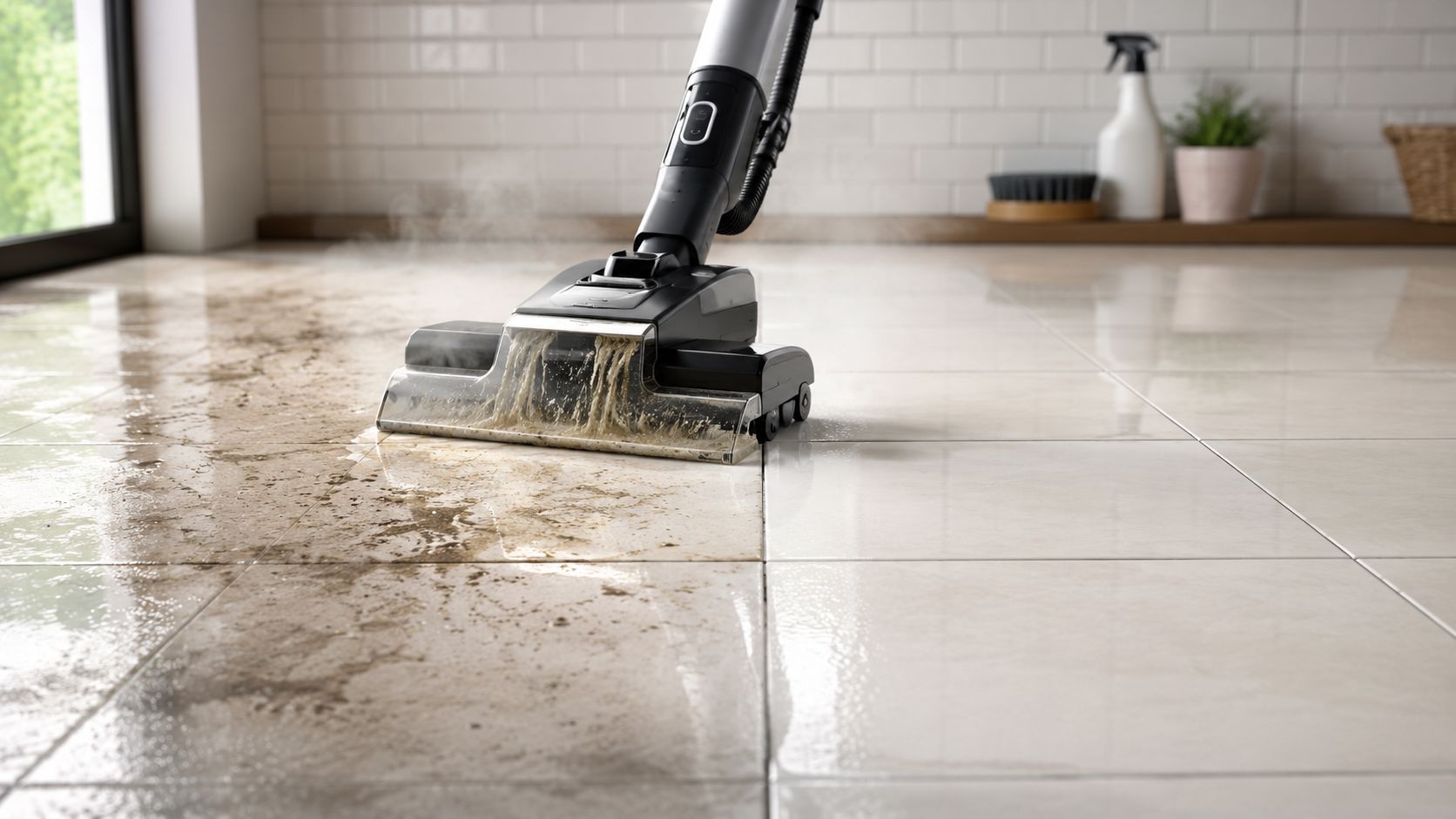
Most advice about tile and grout cleaning machines for home use starts with power. Higher PSI, hotter steam, faster brushes. That sounds logical until the floor contains aging grout, marble, travertine, porcelain, and ceramic in adjoining rooms, a common combination in Massachusetts homes. The wrong machine can remove soil while also stripping sealant, roughening a glaze, or driving moisture into a vulnerable subfloor.
The safer approach starts with the floor, not the machine. Identify the tile, check whether the grout is sealed, inspect for cracks and loose areas, then choose the gentlest tool that can handle the soil. The global grout cleaning equipment market was valued at USD 240 million in 2022 and is projected to reach USD 329.53 million by 2028, with residential users identified as an end-user segment in market coverage of grout cleaning equipment. That growth reflects better access to specialized home tools, but it doesn't make every tool safe for every surface.
Table of Contents
- Can steam cleaners damage unsealed grout?
- How often should I machine-clean tile floors?
- Can these machines clean marble and travertine?
- Is renting a machine from a big-box store worthwhile?
- Will a machine remove mold from grout?
- Can I use vinegar or bleach in a machine?
Why the Most Powerful Machine Might Ruin Your Floors
More force doesn't automatically produce a better floor. A powerful rotary scrubber can work aggressively against deteriorating grout, while high-temperature steam can push heat and moisture into porous joints. On natural stone, an abrasive brush or unsuitable cleaner may leave damage that cleaning can't reverse.
Unsealed grout deserves particular caution because it absorbs water. Aging grout may already be powdery, cracked, or detached at the edges. Pressure and repeated wet passes can widen those weaknesses. Moisture can also move below tile when joints, caulk lines, or surrounding materials have failed.

Start with a compatibility check
Before comparing machines, answer these questions:
- What is the tile made of? Porcelain and glazed ceramic generally tolerate different treatment than marble, travertine, or other porous stone.
- Is the grout sealed? A water-sensitive joint needs a different approach from intact, sealed grout.
- Is the surface damaged? Cracks, hollow-sounding tiles, loose grout, and lifted edges are reasons to stop before wet cleaning.
- Is the floor mixed-material? A machine suitable for a porcelain bathroom may be unsuitable for a marble threshold or stone entryway.
- Can you adjust the machine? Variable pressure, controllable steam, interchangeable pads, and gentle brush options matter more than a single impressive maximum rating.
Natural stone requires special care. Steam shouldn't be used casually on unsealed or porous tile, and aggressive nylon brushes can mark softer stone, as outlined in this guide to choosing a tile and grout cleaning machine. Acidic products create another risk, especially for calcium-based surfaces such as marble and some travertine.
Practical rule: Test the least aggressive method in a hidden area, then inspect the tile, grout, finish, and drying behavior before cleaning the visible floor.
A well-matched machine may leave a floor cleaner without forcing water into the assembly or abrading the surface. For sealing considerations and tile-care fundamentals, review this tile cleaning and sealing guidance. The decision isn't about buying the strongest unit. It's about matching agitation, moisture, heat, and recovery to the materials already installed.
Steamers vs Rotary Scrubbers vs Portable Extractors
The three common machine categories solve different problems. Steam cleaners loosen surface grime with heated vapor. Rotary scrubbers use mechanical action to work soil out of texture and grout recesses. Portable extractors combine solution application with suction, so they can remove dirty water rather than leaving it behind.
Consumer steam mops became popular because they heat water in a refillable tank and apply steam directly to sealed floors without conventional detergent, according to Consumer Reports' steam mop guidance. They can help with daily grime on sealed tile, but they generally don't restore heavily stained grout. A grout brush attachment improves control, while unsealed grout and porous stone remain poor candidates.
Rotary scrubbers are more direct. A spinning brush can reach textured porcelain and recessed joints that a flat mop misses, but the brush and pad must match the surface. A soft brush may be appropriate for routine soil, while a stiff or abrasive head can scratch a finish or remove weakened grout.
Portable extractors are the most complete option for wet cleaning because suction lifts suspended soil and solution. They also require more setup, tank handling, hose cleaning, and drying discipline.
| Feature | Steam Cleaner | Rotary Scrubber | Portable Extractor |
|---|---|---|---|
| Best use | Maintenance grime on sealed tile | Embedded soil and textured surfaces | Heavily soiled floors needing water recovery |
| Main strength | Heat loosens residue with little or no detergent | Mechanical agitation reaches grout recesses | Sprays, scrubs, and removes dirty water |
| Main risk | Heat and moisture can harm unsealed grout or stone | Wrong brush can scratch or erode surfaces | Excess water can remain if recovery is weak |
| Homeowner workload | Usually simple to operate | Requires pad and pressure judgment | Requires the most setup and cleanup |
A steam mop isn't a substitute for restoration, and a rotary machine isn't a license to press harder. If you're also comparing equipment for resilient flooring, keep the surface-specific distinctions in mind when reviewing this guide to home floor cleaner machines.
Key Features and Specs That Actually Matter
Product pages often highlight maximum pressure, brush speed, tank size, or temperature. Those numbers only help when you understand how they interact with the floor. A machine with adjustable settings and reliable recovery is usually more useful in a home than a unit built around one aggressive operating mode.
For rotary equipment, one compact tile scrubber benchmark specifies 650 RPM brush speed, 150 to 180 g/cm² brush pressure, productivity of 250 to 350 m²/h, and solution and recovery tanks of 1.2 to 1.7 L, according to the compact residential grout-cleanup machine specifications. The useful lesson isn't to chase those exact figures. It's that brush speed, pressure, cleaning path, and recovery must be balanced.
Pressure needs a safe ceiling
Pressurized spinner heads may specify a 600 PSI minimum, recommend 800 PSI for effective tile cleaning, and support operation up to 2,500 PSI, as shown in this tile-cleaning spinner equipment reference. Other extractor systems may recommend about 800 PSI while warning against exceeding roughly 1,200 PSI on particular tile or grout surfaces, as described in these tile and grout extractor specifications. Those different limits prove that pressure isn't universal. Follow the machine and surface manufacturer's requirements rather than treating the maximum as a target.
Steam equipment has its own range. Home-use steam cleaners commonly operate around 200 to 300°F, with some guidance identifying 220°F or higher and 230°F or higher as useful thresholds for loosening grout soil in suitable applications, according to this steam-cleaning temperature guidance. Temperature control matters because sealed porcelain and porous stone don't have the same tolerance.

Also inspect the practical details:
- Recovery strength: Suction must keep pace with spray and agitation.
- Brush options: Replaceable, surface-appropriate heads are more valuable than one stiff brush.
- Heat and pressure control: Multiple settings protect mixed floors.
- Reach: Hose length, cord length, and tool balance determine whether you can work without dragging the unit.
- Serviceability: Accessible filters, replaceable seals, durable gear housings, and clear warranty terms indicate a more maintainable machine.
Dry steam systems may produce vapor with under 6% humidity, and some guidance recommends cleaning roughly a 3-foot-square area at a time, followed by agitation and towel removal, as explained in this dry-steam grout cleaning method. That small-area approach gives you time to observe the surface before committing to the whole room. For equipment used on polished surfaces, compare these considerations with home floor polishers and buffers.
How to Clean Tile and Grout Safely Step by Step
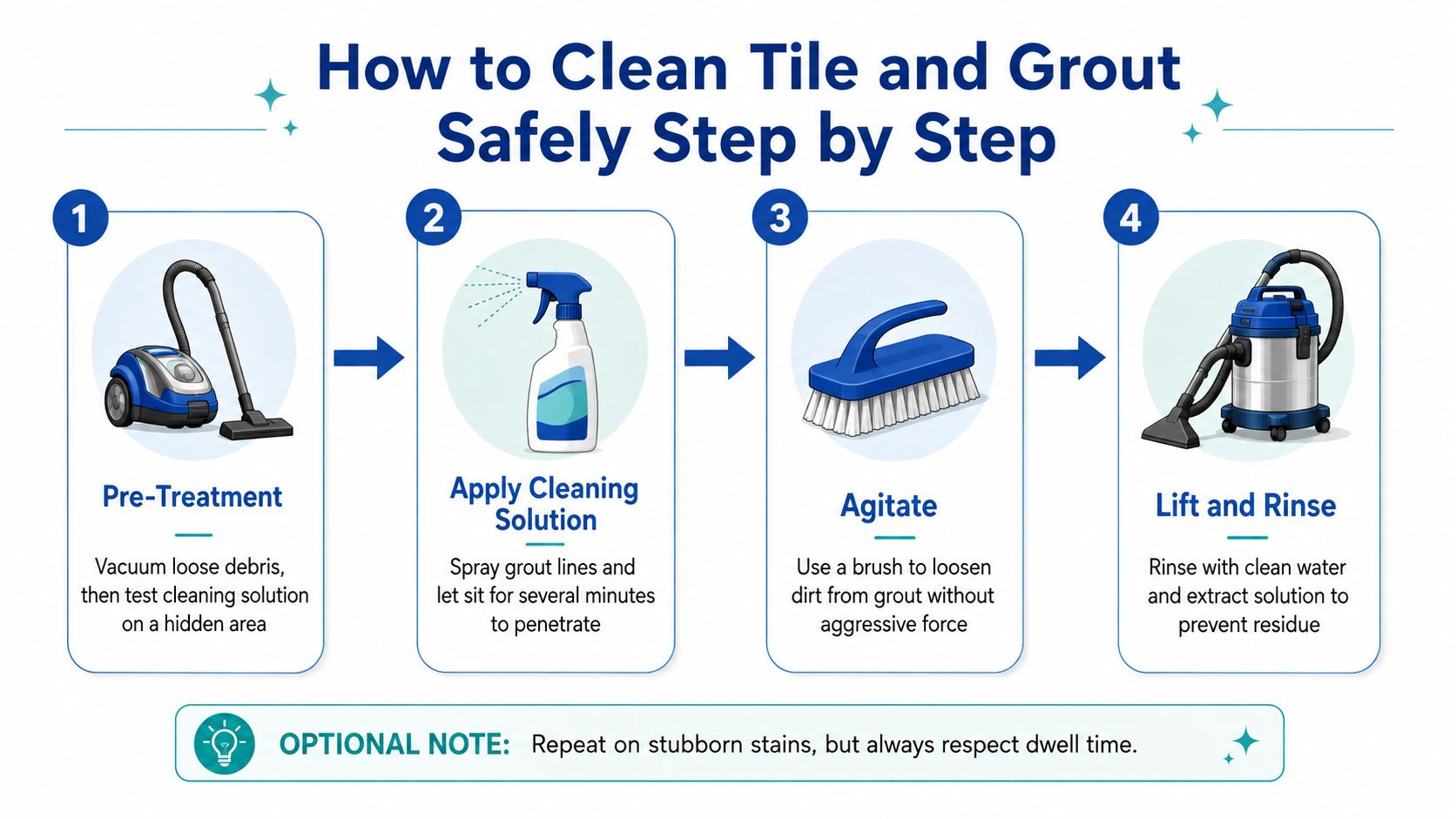
Safe machine cleaning is a two-part process: agitate the soil, then lift it away. Spraying and scrubbing without immediate recovery can redistribute grime, leave detergent residue, and keep grout wet longer than necessary.
Prepare before adding water
- Inspect the floor. Look for loose tiles, cracked grout, failed caulk, chipped glaze, and exposed substrate. Don't machine-clean a damaged area until you understand why it failed.
- Remove dry debris. Vacuum or sweep grit from the tile and joints. Abrasive particles trapped under a pad can create scratches.
- Test the solution. Apply the intended cleaner in an inconspicuous area, then check for color change, dullness, tackiness, or altered grout texture.
- Choose the attachment. Use a soft brush or compatible pad for glazed tile, and avoid aggressive brushes on marble, travertine, and other sensitive stone.
- Adjust the machine. Start with the lowest effective pressure, gentlest brush action, and a conservative water or steam setting.
Work in controlled sections
Pre-spray grout lines with a compatible cleaner and allow appropriate dwell time. Don't let the product dry on the floor. Work in small sections, overlap passes slightly, and keep the machine moving at a steady pace rather than stopping over one joint.
A brush nozzle can loosen soil in the grout recesses. Follow with a towel pass or extractor recovery so suspended dirt and moisture leave the surface instead of settling back into the joint.
Stop if the grout powders, the stone changes appearance, or moisture behaves unpredictably. A darker joint that doesn't begin drying evenly is a warning, not a challenge.
Rinse with clean water when the cleaning system calls for it, then extract immediately. Inspect the result after drying before repeating a stubborn area. More passes won't correct an incompatible chemical, a failing grout bond, or a stone surface that has already etched.
When to DIY and When to Call a Professional
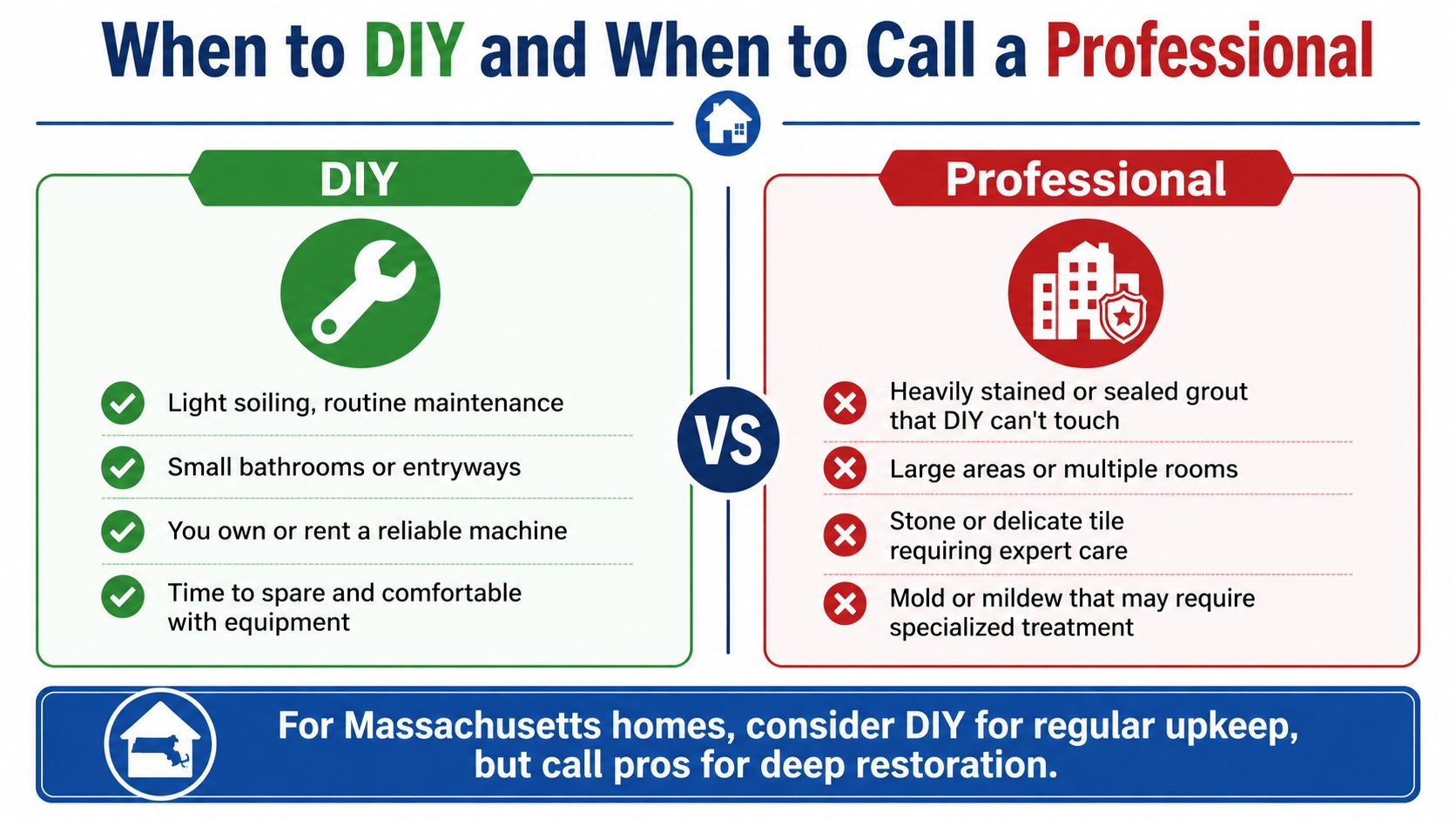
DIY cleaning makes sense when the floor is familiar, intact, and lightly to moderately soiled. A sealed porcelain or ceramic bathroom, a compact entryway, or a routine touch-up after professional cleaning can be manageable with a reliable machine and careful technique.
The risk changes when the floor is mixed, damaged, or valuable. Older Massachusetts homes may contain natural stone transitions, aging grout, and floors that have experienced repeated wetting, winter salt, or years of inconsistent maintenance. A machine rental can look inexpensive until you add cleaning solution, transportation, setup, drying time, and the possibility of replacing damaged grout or refinishing a marked surface.
A practical decision guide
DIY is reasonable when:
- The surface is known: You have sealed ceramic or porcelain and the grout is stable.
- The area is contained: A small bathroom or entryway lets you test and control moisture.
- The soil is maintenance-level: Surface dullness, tracked dirt, and ordinary bathroom residue respond better than deep failures.
- You can stop: You're comfortable testing, adjusting, and abandoning the machine if the floor reacts badly.
Professional help is the safer choice when:
- Grout is deteriorating: Crumbling, missing, or loose joints need assessment before cleaning.
- Stone is involved: Marble, travertine, and other porous materials need compatible chemistry and controlled agitation.
- The project is extensive: Large areas or multiple rooms make consistent pressure, recovery, and drying harder for a homeowner.
- Mold appears deep in the joint: Surface mildew may clean up, but hidden growth can require specialized antimicrobial treatment.
- Stains remain embedded: Repeated DIY passes can wear the floor without reaching the source.
Seasonal conditions matter locally. Winter salt can accumulate in entryway grout, while damp bathrooms and poorly ventilated rooms can support mildew. Professional cleaning can be a better long-term value when the cost of a mistake includes grout replacement, tile damage, or moisture-related repairs.
A qualified technician can identify the material, select a compatible method, and judge whether cleaning is appropriate at all. That assessment is often more valuable than applying greater pressure.
Machine Maintenance and Storage Best Practices
A tile machine's tanks, brushes, hoses, filters, and seals carry the residue you just removed. Leaving that material inside the equipment creates odors, clogs, and premature wear.
Immediately after use, empty both solution and recovery tanks. Rinse them with clean water, flush extraction lines, remove hair and grit from brushes, and wash reusable pads according to the manufacturer's directions. Leave components open or separated long enough to dry fully.
Use a simple service routine
- After every job: Empty tanks, rinse lines, clean the nozzle, and inspect the brush for wrapped debris.
- Weekly during frequent use: Clean filters and check hoses for soft spots, cracks, or restricted flow.
- Monthly: Inspect electrical connections, wheels, seals, brush attachment points, and visible fasteners. Lubricate moving parts only where the manufacturer specifies it.
- Before storage: Drain all water, dry removable parts, coil cords loosely, and protect attachments from crushing.
Massachusetts garages and basements can become cold enough to freeze trapped water. Store the machine in a climate-controlled space when possible, especially if the equipment contains narrow internal lines or plastic fittings.
Reduced suction often points to a full filter, blocked nozzle, loose connection, or recovery tank problem. Loss of pressure may come from a clogged spray tip, low solution level, or air entering the system. Unusual noise, leaking seals, repeated overheating, or uneven brush wear deserves more than a quick restart.
Turn the machine off and unplug it before clearing a blockage. If cleaning filters and checking connections doesn't restore operation, use the manufacturer's service instructions. Repair makes sense when the unit has durable, replaceable components. A disposable machine with a failed motor, damaged housing, or unavailable parts may not justify extensive service.
Frequently Asked Questions About Home Tile Cleaning Machines
Can steam cleaners damage unsealed grout?
Yes. Steam can force heat and moisture into porous grout, which may weaken the material or its bond over repeated use. Steam is better suited to compatible, sealed tile surfaces, and you should test a hidden area first.
How often should I machine-clean tile floors?
The right interval depends on foot traffic, cooking residue, pets, moisture, and how well routine cleaning removes soil. Many homes can use machine cleaning every 3 to 6 months, while busy entryways and damp bathrooms may need attention sooner. Use regular dry debris removal and gentle mopping between machine sessions.
Can these machines clean marble and travertine?
Some professional systems can be configured for natural stone, but a general-purpose home machine shouldn't be assumed safe. Acidic cleaners and high-pressure steam can etch calcium-based stone, while aggressive brushes can scratch softer surfaces. Choose a stone-specific method or call a technician familiar with the material.
Is renting a machine from a big-box store worthwhile?
Rental can make sense for a contained project when you already know the floor is compatible and the equipment offers suitable pressure, brushes, and recovery. Purchasing may be practical for recurring maintenance, but neither option removes the risk of using the wrong setting or chemical. Compare the full rental cost, transport, setup, cleaning, and possible damage before deciding.
Will a machine remove mold from grout?
It may remove surface mildew and discoloration, but deep fungal growth can remain inside porous joints or behind failed caulk. Persistent odor, recurring dark spots, or moisture damage calls for professional assessment and possibly antimicrobial treatment.
Can I use vinegar or bleach in a machine?
Avoid both unless the machine and flooring manufacturer explicitly approves them. Vinegar can etch sensitive stone and affect cement-based materials, while bleach can damage grout, discolor finishes, and create unsafe residues. Use a compatible product at the recommended dilution, and never mix cleaning chemicals.
Sunny Day Pro Services provides professional tile and grout deep cleaning for Massachusetts homes, including detailed grout scrubbing and tile care when a rental machine can't safely reach the result you need. Visit Sunny Day Pro Services to request a quote for service in Wayland, Newton, Needham, Wellesley, Weston, and nearby communities.

