
What Is Post Construction Cleaning: A Complete Guide
Learn what is post construction cleaning, the three phases pros follow, practical checklists, costs, and when DIY makes sense for Massachusetts homeowners.
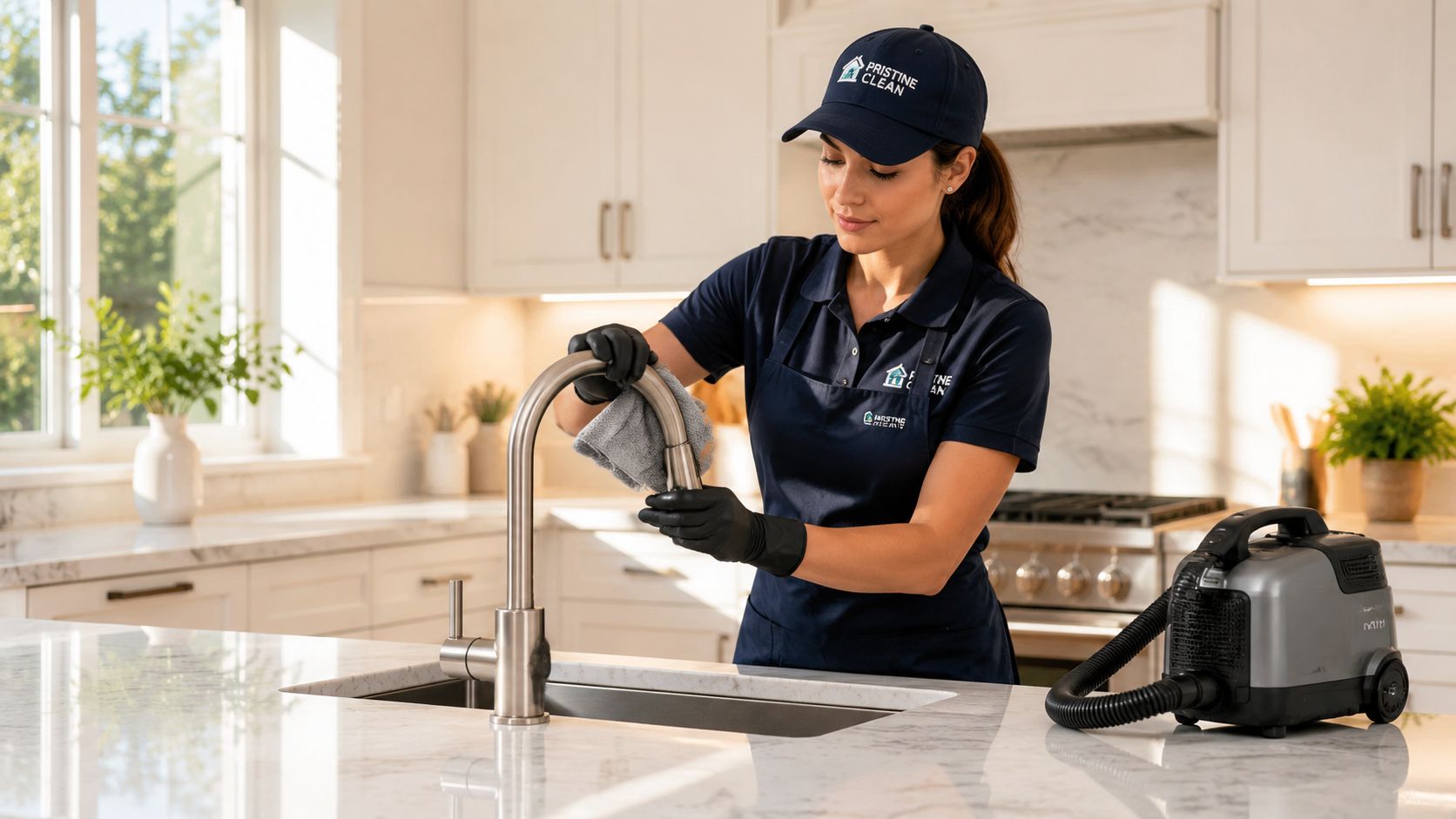
Post-construction cleaning is the specialized cleanup that prepares a build or renovation for occupancy. It usually sits in the $250 billion to $350 billion market range for one forecast, while another puts it at $15 billion to $25 billion by 2033, which shows how differently the category gets defined, but either way it's a real finishing service, not routine housekeeping (market estimate and projections).
You can walk into a finished kitchen, see the cabinets installed, and still find white dust on the trim, grit in the window tracks, and film on the floors. That's the moment most homeowners in Massachusetts realize the build is done, but the space still isn't ready to live in.
Table of Contents
What Post Construction Cleaning Means
A remodel can be finished on paper and still feel unfinished the moment a homeowner opens the front door. Fine dust sits on trim, settles into corners, and leaves a hazy film on every flat surface. Post-construction cleaning closes the gap between an active job site and a space that is ready to live in.
Routine housekeeping keeps an occupied home in order. Post-construction cleanup handles drywall dust, adhesive residue, paint specks, labels on new fixtures, and the debris left behind as different trades finish their parts of the job. Professional crews break that work into three phases, rough clean, detail or light clean, and final or punch clean, because each pass deals with a different level of contamination, from bulk debris to the last bits left after other trades are done (three-phase workflow).
What it includes and what it doesn't
A real post-construction clean reaches farther than a quick sweep. It usually covers ceilings, light fixtures, fans, trim, thresholds, cabinets, shelves, walls, frames, sticker removal, trash disposal, and both the inside and outside surfaces that collect construction residue. A useful way to set the scope is to ask whether the crew is covering the full checklist scope needed for a move-in ready finish.
Practical rule: if the quote sounds like a standard house clean with a new label on it, ask what happens to dust on vents, frames, and newly installed finishes.
The service does not include hauling away heavy construction rubble, fixing defects, or making structural repairs. Those jobs belong to other trades. A proper cleaning scope removes the visible and hidden residue so the homeowner, inspector, or contractor can walk through the space without seeing the marks left by the work.
Massachusetts homeowners can judge the difference by listening for detail. A provider who only talks about mopping floors and wiping counters is usually offering a light tidy, not finishing work. A crew that explains dust control, residue removal, phase-by-phase cleaning, and final inspection points is describing the kind of service that fits a post-remodel home. If you want a plain-language overview of how the work should be organized, Sunny Day Pro Services offers a helpful guide on how to clean after construction.
The Three Phases Every Professional Crew Follows
A jobsite cleanup has to move in stages. If a crew tries to finish everything at once, the dust gets stirred back up, settles again, and turns the same rooms into work zones twice. The order matters because each phase prepares the space for the next one.
Rough clean first
Take a kitchen remodel in Wayland. The framers leave, the tile setter finishes, and the electrician is still due back for trim work. The rough clean clears the obvious debris, scraps, labels, and heavy dust so the next trade can work without dragging the mess through the house.
That first pass usually includes hauling loose construction waste, vacuuming heavy dust, and stripping stickers or protective labels from new fixtures. It is not about polishing anything yet. It is about opening up the site enough for the next phase to be accurate and safe.
Light clean then final clean
The light clean is where detail starts to matter. Crews wipe dust from reachable surfaces, clean cabinet interiors, address window tracks, and damp mop hard floors so fine powder does not get ground into the finish. The final clean adds the last inspection, glass polishing, fixture detailing, trim touch-ups, and threshold work, usually under low-angle light so missed dust stands out.
That staged order helps control recontamination. If a team does everything in one visit while other trades are still moving through the house, fresh dust lands on surfaces that were just cleaned. Single-pass cleanups often look good at noon and disappointing by the next morning.
A standard checklist goes well beyond sweeping floors. It includes walls, windows and frames, ceilings, lights, fans, floors, trim, thresholds, appliances, cabinets, shelves, and inside and outside surfaces, plus sticker removal, trash disposal, and a detailed final inspection of corners and inner surfaces. For a homeowner who wants a simple reference point, this local cleaning guide is a useful comparison for the kinds of follow-up tasks crews usually cover after renovation work.
Why Fine Construction Dust Is the Primary Challenge
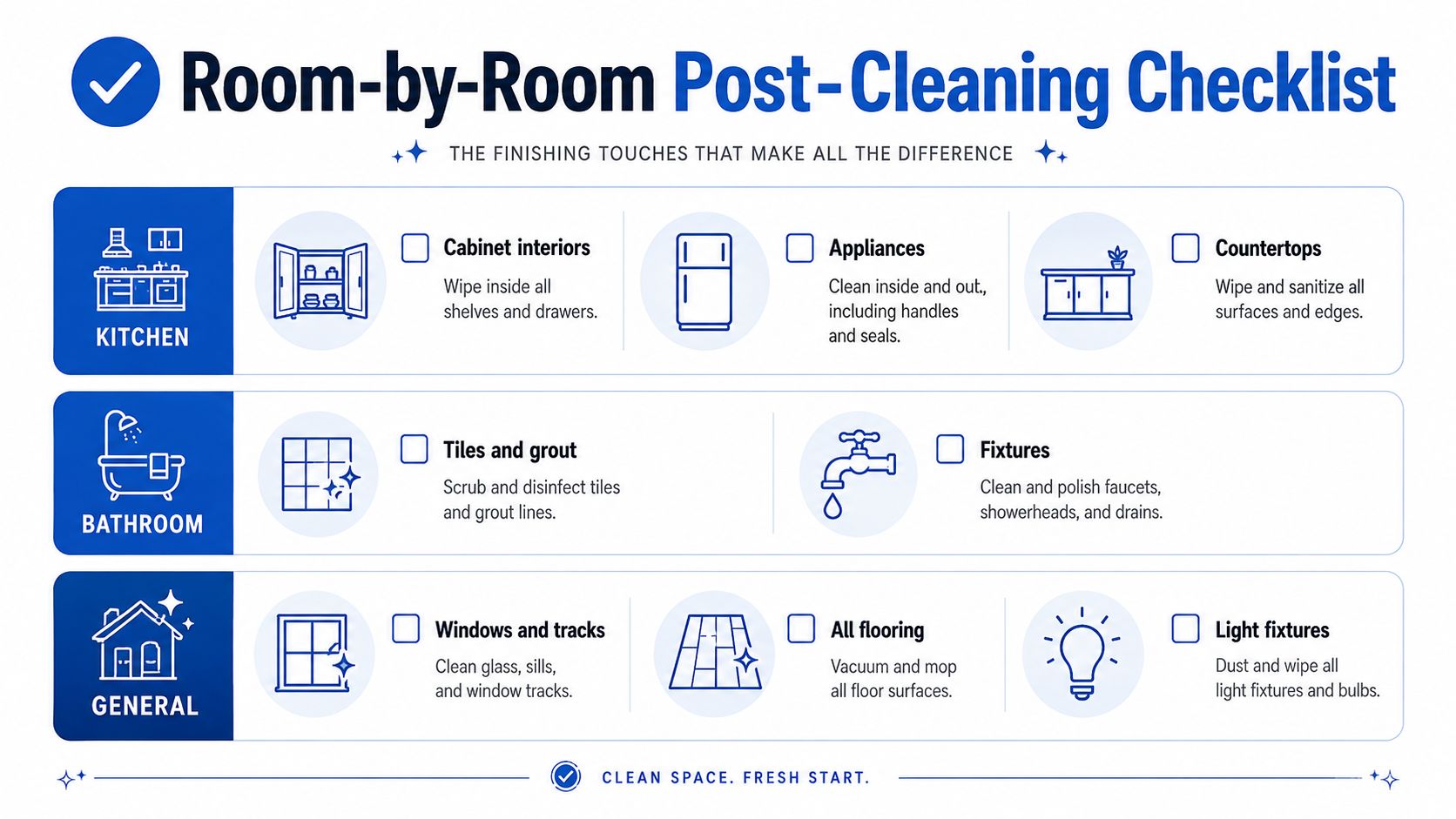
The debris homeowners see first is usually the easiest part to remove. The harder issue is the fine dust, because it keeps moving after the visible mess is gone.
Drywall sanding, sawing, and demolition create particles that settle on shelving, counters, vents, and registers. Industry guidance also points to top-to-bottom cleaning and HEPA guidance because construction residue lands on every surface and needs to be captured, not pushed around.
Why dust comes back
This is the part homeowners usually do not expect. A room can look clean after one crew leaves, then a thin layer of dust shows up again on the TV stand, the baseboards, or the freshly painted trim. That happens because the smallest particles stay airborne long enough to travel with indoor air movement, especially around HVAC vents, returns, and registers.
Standard vacuums and dry dusting tools can make the problem worse if they are not paired with proper filtration. They can lift dust off the surface without trapping it, which means the particles settle again later. A HEPA-equipped vacuum changes the job because it is built to capture fine particulate instead of recirculating it.
The hard part is not making a space look clean once. It is stopping the dust from showing up again after the crew has gone home.
That is why post-construction work should include vent vacuuming, filter checks, and a verification pass under bright and low-angle light. I have watched homes in Massachusetts look finished in daylight, then show dust halos on frames and ledges once the sun moved across the room. A careful final pass catches that before it turns into a complaint about air quality or missed detail.
For a closer look at how residue behaves, this drywall dust guide is a useful companion read for homeowners trying to understand why dust keeps reappearing.
A Practical Room by Room Cleanup Checklist
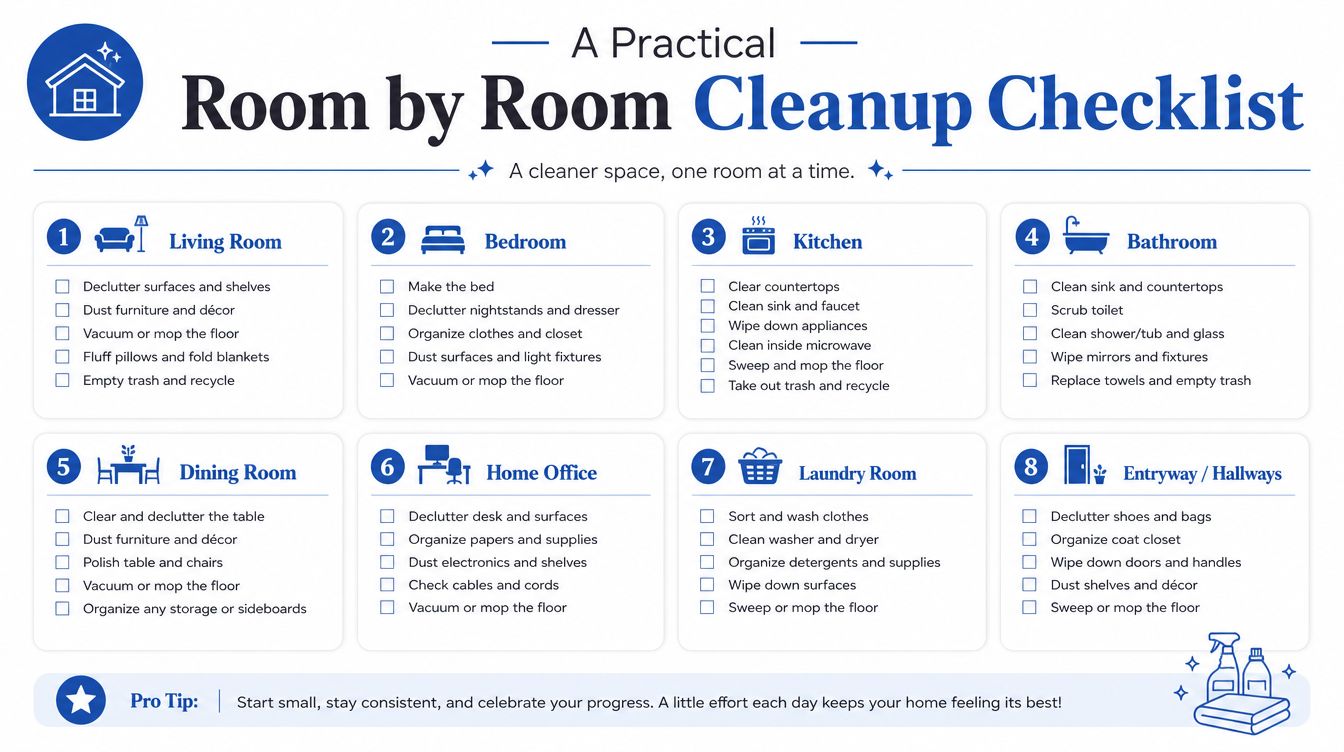
Use this as a handoff list when you're comparing estimates or checking a crew's work. A real cleanup scope should name the surfaces, not just say “general cleaning.”
Kitchen and bath details
In kitchens, the finish work should cover cabinet interiors and exteriors, appliance exteriors and any accessible interiors, tile grout lines, and range hood filters. In bathrooms, look for clean fixtures, mirrors, glass, caulk lines, grout, and exhaust fans.
Those are the areas where renovation residue hides fast. A quick wipe on the counter isn't enough if the drawer slides still have dust, or if the vent cover is packed with debris from the ceiling cutout.
Living spaces, windows, and floors
Living areas should include walls, ceilings, light fixtures, ceiling fans, trim, baseboards, outlets, and switches. Windows need glass, frames, tracks, sills, and screens checked, not just the pane you can see from the room.
Floors need the right approach for the finish. Hard surfaces usually get a damp mop or neutral cleaner, and vacuuming comes before any sealing or special finish work if the surface needs it. The goal is to remove the construction film without dulling a new finish.
Handoff check: run your hand across a baseboard, open a cabinet, look at the top edge of a door frame, then look at the floor under angled light. If those spots still show residue, the job isn't complete.
Here's the simplest way to audit the result. Ask whether the crew cleaned top surfaces before lower ones, whether they handled sticker and adhesive removal, and whether they did a final inspection of corners and inner surfaces. If they can answer those questions clearly, the scope is probably real. If they can't, you're probably looking at a basic house clean in a contractor's vocabulary.
DIY or Hire a Professional Crew
A DIY cleanup can work on a small job with light dust. Once the project gets bigger, the line between “I can handle this” and “I need help” shows up fast, especially when fine dust keeps settling back onto surfaces you already wiped.
What DIY Requires
A do-it-yourself cleanup needs a HEPA vacuum, several microfiber systems, neutral cleaners that are safe for new stone or tile, ladders, vent-cleaning tools, and plenty of time. It also takes patience, because a hurried pass can scratch new finishes or push dust deeper into joints, tracks, and corners where it keeps showing up after the first wipe.
For a small bathroom refresh with minimal drywall work, DIY can make sense if you already have the right tools and you're willing to spend a full weekend on detail work. For a whole-home renovation, a kitchen gut, or any project with delicate new tile, the risk goes up because an abrasive product or the wrong pad can damage what you just paid to install.
Where professionals fit better
Hiring a crew makes more sense when the job is large, the timeline is tight, or the homeowner wants the liability shifted to someone who does this every day. Reputable companies also bring scheduling discipline, a written scope, and a satisfaction guarantee that puts missed detail back on the company instead of on you.
Sunny Day Pro Services is one Massachusetts option that provides post-construction cleanup alongside cleaning and tile work, which can help when the handoff includes both a final clean and related surface finishing. For a local example of how a cleanup scope can be described before you compare estimates, review the new construction cleanup page from Sunny Day Pro Services.
A clean result is only part of the job. Fresh finishes, empty rooms, and contractors still finishing punch-list items call for careful work around edges, vents, and surfaces that can pick up dust again if the sequence is wrong.
Typical Costs and Timeframes for Massachusetts Projects
Post-construction pricing usually makes more sense when you think in terms of square footage and phase count, not room count. That's especially true in places like Greater Boston and MetroWest, where a polished final walkthrough matters as much as the cleaning itself.
The broad pricing guidance for interior post-construction work commonly runs from $0.15 to $0.60 per square foot, while larger commercial final cleaning often rises to $0.30 to $0.75 per square foot. U.S. totals often range from $274 to $707, with a typical average around $477, and a 5,000-square-foot suite can land around $1,500 to $3,750 for the final clean (cost guidance). For a local service comparison point, this New England cleanup page is worth reviewing before you compare written estimates.
| Project size | Usual price range | Price per square foot | Typical visits | Notes |
|---|---|---|---|---|
| Small residential refresh | Usually closer to the lower end of quoted totals | Often around the lower interior range | One rough pass and one final pass | Best for limited drywall dust and a short punch list |
| Mid-size renovation | Often lands in the middle of the quoted totals | Commonly within the standard interior range | Two visits, sometimes three if trades return | Cabinet detail, glass, and floor finish work matter more here |
| Large or commercial-scale work | Can move into the higher project total range | Often closer to the higher final-clean guidance | Three phase visits or a phased schedule | Deadlines, access windows, and walkthrough standards drive the plan |
Several things push a quote upward. Marble or honed stone usually calls for neutral cleaners, multiple stories add labor, occupancy deadlines compress the schedule, and post-trade touch-ups add time. If a quote doesn't say whether a final walkthrough is included, ask before you sign, because that detail changes how you compare bids.
How to Choose the Right Cleanup Crew
The right crew should sound organized before they ever show up. If the company can't explain scope, insurance, or how it handles damage concerns, keep shopping.
Questions worth asking
Start with the basics. Ask for insurance documentation, workers' comp coverage, background checks for anyone entering an empty home, and a written phase-by-phase scope of work.
Then ask how they protect new finishes. A serious company should be able to tell you what products they use on fresh tile, stone, glass, and painted trim, and what they do if a surface gets marked or scratched during the job. That's especially important in homes with children, pets, or chemical sensitivities, where eco-friendly product options matter.
What trust looks like in practice
You want a crew that's trained, not a rotating group of day laborers learning on your new floors. You also want a company that lines up with contractor punch lists, because cleanup timing affects whether the final walkthrough feels smooth or chaotic.
Here's the short version of the filter I'd use on any Massachusetts quote:
- Written scope: It should list phases, surfaces, and final detail work clearly.
- Damage policy: It should explain what happens if a fresh finish gets marked.
- Scheduling: It should fit around contractor turnover without forcing rework.
- Guarantee: Missed detail should come back to the company, not become your problem.
Sunny Day Pro Services serves Wayland, Newton, Needham, Wellesley, Weston, and nearby communities with post-construction cleanup and tile installation follow-up, so homeowners can line up the cleanup and related surface work with one local team. If a provider can't meet the basics above, the lowest quote usually isn't the cheapest path.
If your renovation just wrapped and the dust keeps reappearing, Sunny Day Pro Services can help finish the job with post-construction cleaning that's built for real handoff standards. Visit Sunny Day Pro Services to request a fast quote and line up cleanup with the rest of your project the right way.

